Summary
After completing the lesson, students will be able to:
- Read and understand written instructions.
- Read and understand texts.
- Ask and answer questions.
- Participate in short dialogues and conversations on familiar topics.
- Write short paragraphs.
A. Match the pictures with their names:
- Paracetamol
- Holy basil/tulsi
- Antacid
- Honey
- Neem
- Turmeric
- Aloe vera
B. Changes in Attitudes Toward Natural Medicine:
People are increasingly turning to natural cures made from herbs and plants, a practice dating back to ancient civilizations. Remedies like aloe vera, honey, and turmeric are commonly used for minor ailments and are often preferred for being effective and free of side effects.
- B1. Identify natural cures and chemicals:
- Column A (Natural Cures): Honey
- Column B (Chemicals): Savlon
- B2. Answer the following questions:
- What are natural cures made of?
- Are herbal cures modern inventions? Explain.
- Which civilizations are known for herbal treatments?
- What natural remedies are used for cold?
- What herbal cures are used for skin problems?
C. Complete expressions with words from the box:
- 1. a ______ of ointment
- 2. a ______ of aspirin
- 3. a ______ of bandage
- 4. a ______ of foot spray
- 5. a ______ of tissue
Now write sentences using these phrases.
D. Practice the following dialogue in pairs:
Pharmacist: Good morning. Can I help you?
Mr. Arman: Do you have anything for dry skin?
Pharmacist: You may try this new body lotion or this brand of Olive oil.
D1. Create short dialogues based on given situations using appropriate modal verbs.
E. Home Remedies:
Many people use home remedies for common ailments like colds, coughs, toothaches, and headaches:
- Cough: Basil leaf juice and honey, grape juice, hot milk with honey, ginger tea.
- Cold: Lemon juice, hot water, and honey for vitamin C intake.
- Toothache: Cloves, clove oil, garlic, and a mix of pepper and salt.
- Headache: Eating apples, cinnamon paste applied to the forehead.
E1. Learn the following words: ginger, resistance, clove, garlic, pepper, cinnamon, sensitive, munch, pinch.
E2. Ask family members about other home remedies and make a list.
After completing the lesson students will be able to
- read and understand written instructions
- read and understand texts
- ask and answer questions
- participate in short dialogues and conversations on familiar topics
- write short paragraphs
A . Look at the following pictures. Discuss with your partner what they are. Match them with their names given in the box.
paracetamol | holy basil/tulsi | antacid | honey |
neem | savlon | turmeric | aloe vera |
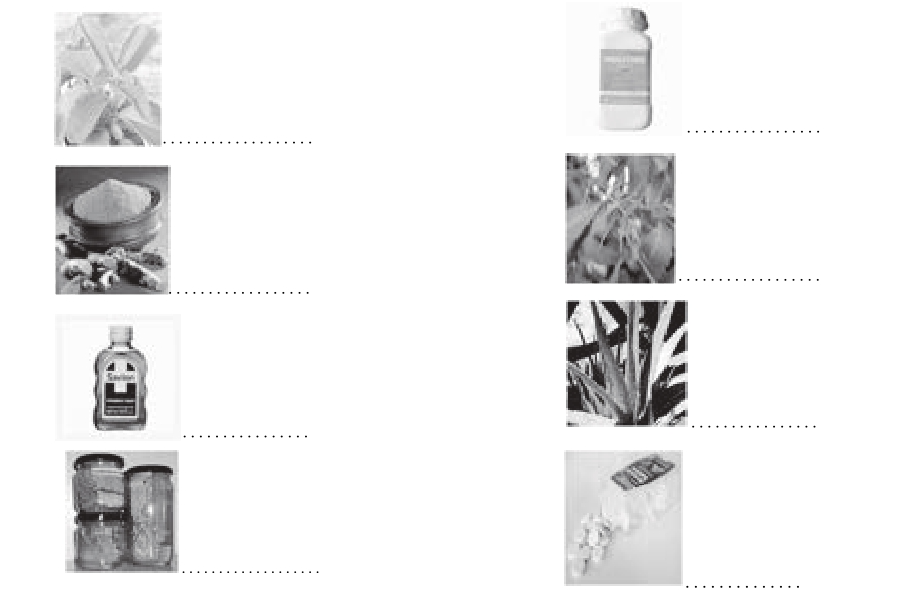
B . Read the following text.
People around the world are slowly changing their attitude towards medicine. More and more they are turning to natural cures. Natural cures are made of natural things, most often herbs and plants. History says that natural or herbal remedies are nothing new. People used them all along in different ages. Herbal medicines were used in ancient civilizations like India, China, Greece, Egypt, and Rome. Some ancient treatment systems are still in practice today. They have come down through generations.
For a minor burn injury the doctor may prescribe you a tube of ointment. But for the same, your grandma may put some aloe vera or use cold water. If children have cold in our country, grandmas give them honey and tulsi leaves to eat. And it works too. If you have a minor cut or wound, grown-ups may put some turmeric, marigold or aloe vera on it. Rural people usually use garlic, neem or turmeric to cure skin problems. With experience they have seen that these remedies work. Moreover, they are easy to get, are cheap and most often are without any side effects.
B1 . Find out the items for natural cures and chemicals. write the names of natural cures in column A. In the column B, write the items that are chemicals.
Column A (Natural cures) | Column B (Chemicals) |
honey | savlon |
B2 . Answer the questions.
1 What are natural cures made of?
2 Are herbal cures modern inventions? Explain your reasons.
3 Which civilisations are known for herbal treatments?
4 What natural remedies are used for cold? Can you add any more natural treatment for cold?
5 What herbal cures are used for skin problems?
C . Work in pairs. Complete the following expressions with words from the box.
bottle | box | can | package | tube |
1 . a ______ of ointment
2. a ______ of aspirin
3. a ______ of bandage
4. a ______ of foot spray
5. a ______ of tissue
Now write down some sentences using these phrases.
D . Read the dialogue and practise in pairs.
Pharmacist Good morning. Can I help you?
Mr Arman Do you have anything for dry skin?
Pharmacist Well, you may try this new body lotion. It's good. Or, you can try this brand of Olive oil. Olive oil is also good for dry skin.
Mr Arman Well, I think I'll take the lotion. How much is it?
D1 . Work in pairs. Read the following situations and then make short conversations for each situation using can, could, may, should, etc. where necessary.
1 You want your teeth to be strong. Ask for a good toothpaste. Your partner will suggest or offer one.
2 Decide first what you want to buy and ask for it. Your partner does not have what you want but he/she has something similar.
3 You have slightly cut your finger. You ask for something to put on it. Your partner suggests 'Bandaid'.
4 Your mother has a headache. You ask for a medicine. Your partner gives you 'Vicks'.
E . People with a cold, a fever, or the flu often go to the doctor for help. But many people in our country also use home remedies for common illnesses. Read about some simple home remedies and answer the following questions.
Cough
For children's cough, grandmas give two tea-spoons of basil leaf/tulsi juice with one spoon of honey. It works excellent.
Some people take grape juice and honey too. It is also good for dry cough.
Hot milk with honey is also useful in cough problems.
You can take ginger tea which is also a useful home remedy for cough.
Cold
Lemon juice is good for any cold because it contains vitamin C. Vitamin C increases body resistance. Lemon juice, hot water and honey together work well in healing common cold.
Toothache
In normal toothache, keep a clove in your mouth. Place it in between the aching teeth and suck on it. You can even apply clove oil on the affected tooth.
Garlic also cures toothache. Place a clove of garlic on the aching tooth and munch mildly. Its juice will work as a relief.
A pinch of pepper powder mixed with common salt works well on the aching tooth. It's especially effective against the increased sensitiveness of the teeth.
Headache
Eating apples give good result in headaches. While eating, add a little salt to it.
When headache is caused by cold winds, cinnamon works the best. Make a paste of cinnamon by mixing in water and apply it on your forehead.
E1 . Learn these words: ginger, resistance, clove, garlic, pepper, cinnamon, sensitive, munch, pinch (as used in the text).
E2 . Do you know any other home remedies that people use in our country? Ask your parents / relatives and make a list of such remedies other than the items given in your text.

Read more